Showing posts with label Review. Show all posts

Wednesday, December 29, 2010

Two decades since Naipaul came to India

Just through reading Naipaul’s ‘India – A Million Mutinies’ the last of the trilogy on Naipaul’s travelogue in India and I wonder, as yet another year draws to a close, if Naipaul would have seen India in a different light from the India he saw in 1990.  India then was standing at the threshold of an economic growth miracle to be fueled by the opening up of the economy and the easing away of the License-Permit raj. Naipaul would today have perhaps travelled more comfortably to the rural hinterlands of Punjab, been astounded presence of the ubiquitous Nokia handset in the hands of the boy who repairs tires by the roadside or by the spending power of the burgeoning middle-class in the glitzy malls but the million mutinies that he saw then would still be there.

Two decades later while the sense of ‘nation’ has grown (and we have the British to thank for this), the country remains as fractured as ever – factures that are both old and new. The political demography of the country has seen a sea change from the heady days of independence. The rise of regional parties and the pressures of running a coalition government – never an in-thing with the family driven Congress Party has thrown an entirely different set of challenges for the nation. The replacement of Brahmin power starting from the south and extending up to the north has brought forth a new breed of politicians and political ideology that has done nothing, just as Brahmin hegemony did nothing, for the economical transformation of the deprived classes – they remain in the same state if not worse even as the nation steps firmly into its next growth curve. The acute lack of governance (‘su-shasan’ as Nitish Kumar succulently puts it) at the federal and state levels (except perhaps states such as Bihar, Gujarat etc.) has widened old economic fractures and introduced more yawing gaps between the rich and the poor.  Endemic corruption coupled with poor policy measures, lack of transparency and controls has seen a galloping increase in prices of essential commodities leaving a significant part of the populace without access to very basic food let alone a minimum balanced diet. The International Food Policy Research Institute (IFPRI)’s Global Hunger Index (GHI) estimate ranks India at a low 66 out of the 88 developing countries - a score worse than many Sub-Saharan African countries! While I find the WPI (Wholesale Price Index) an inaccurate measure to gauge Food Inflation (the middlemen and hoarders are the devils in heady supply chain cocktail) the following table (Inflation in %) gives you a sense of how prices have been on a sprint.

Items
1993 – 94
2004 – 05
2010 - 11
Primary Articles
7.9 %
9.2 %
19.3 %
Fuel and Power
4.2 %
5.9 %
13.5 %


Monday, February 23, 2009

Oscared Slumdog Millionaire

The Oscar's are all but over and ‘Slumdog Millionaire’, a desi movie by a videshi has won an enviable bevy of 8 Oscars – a no mean feat. The crowning glory – AR winning two Oscars and Resul Pookutty bagging the Best Sound Mixing Oscar – a commendable performance, especially for Resul, knowing that we Indians don’t have access to the best technologies as our more lucky compatriots in the west do. It would do every Indian proud to see their homeboys rubbing shoulders with the best there is of Hollywood, standing up on the world stage and chanting ‘Jai Hind’ in unison.

Of the very few films that I see each year, I was goaded into viewing Slumdog Millionaire by my wife, enamored as she was with the rave reviews that appeared in almost all print and electronic media. I must confess, and I would be one of those one-in-a-million kinds, who stepped out of the theater extremely disappointed. I did not like the film, period. A good film is as much about a good story, a story that forces you to think and reflect, as it is about good technique, direction, use of the technology etc, among a host of other such parameters. To me, a good film leaves behind a good and long lasting aftertaste, which, at the very least hangs on for a couple of days if not more. Slumdog Millionaire does nothing of that sort. I forgot the film as I stepped out of the hall, that's it! While I do not grudge the musical and technical awards that it has won (adapted screenplay, film editing, sound mixing, cinematography, original score and original song), but the fact that the film has won the Best Picture and Best Director Award is a huge dilution for what the Oscar’s stand for. Why is it that the film has captured the imagination of the jury? It has an average storyline – a rags-to-riches story with a fair bit of romance thrown in, a cop who moves from being malevolent to benevolent, and a fair bit of blood and gory. Here's why I think the western critics feel for the film.

Every country and race has, due to some quirk of history, been typecast into certain image patterns. For instance the image that India generates is one of cows, sadhus, poverty, slums, filth, corruption etc. An African-American is typically seen as a druggie, mugger, a member of some vicious gang etc. Africa on the other hand brings up images of wild animals, suffering, abject poverty and hunger. These are images that appeal to us the most and hold true our mental image of the race and country. Most of the tourists from the western world helplessly retain images of India as dusty and noisy country, beggar children with snooty noses peering through the car window as you wait for the lights to change, unruly traffic, potbellied cops etc. For an average western mind, India and its ever changing colour, its huge diversity of culture, its languages, its religious diversity, its chaos is a bit too much to take in and understand. No Sir, we are not an easy country and race to understand. So when Danny Boyle holds aloft a medley of images that western audiences are so used to seeing, it is then that they start feeling comfortable and see in the film the India of their imagination. The film portrays the image of India most tourists retain – a superficial, surface view – a view that shows just one small (but true) side of a complex crystal like shape that is India. Good, but is that good enough to win a Best Picture Oscar? The hype that the film created in India also exposes the deep scar in the Indian psyche left by years of British rule – a period during which Indian were left to feel as savages without a sense of history or culture. Deep down somewhere we are still diffident in taking a divergent view to the pronouncements of the Western world. Thus, as the film started getting rave reviews in the west, the Indian critic too started to toe the western line, with the media jumping into the fray. Except for Amitabh Bachchan, and kudos to him, for standing out (though I really didn’t know why, before I saw the film), there has been little noise to the contrary. Yes the film has been shot well, edited well, the score was fantastic and all that but to win the Best Picture and Best Director awards? My view of what the Oscars stand for has gone down quite a number of notches.

Wednesday, May 07, 2008

First African Author...

Every time I read a particularly captivating book by an author who I haven’t read before, I feel like kicking myself for discovering him or her, as the case may be, so late in my reading cycle. It has been an unfailing ritual with me! My latest discovery has been Doris Lessing and what a revelation she has been! Some of you guys out there may be thinking “Ain’t seen a bigger dud”, but what the heck – never late than never!

It was pure serendipity that the book that my paw rested on was ‘the grass is singing’, Doris’s first novel, set in Southern Rhodesia, today’s Zimbabwe. An intense and captivating book, Doris brings to the fore her powerful experience of life in Southern Rhodesia, the country that her father chose to travel to make his pot of gold by going the farming route. The reader is pitch forked right into the middle of the action from the word go as Doris throws open a window through which we see and intimately experience the life of the main protagonist Mary Turner.

Mary shows us how deep the racial divide ran between the white settlers and coloured natives. Her life exposes the subtle but unmistakeable class system within the whites themselves and their unrecorded and unspoken rules of camaraderie. More importantly it is through Mary that we learn the rules of engagement with the coloured – so biased, so inhuman, that at times it fills you with a sense of loathing for the people who could have behave thus.

As we journey along with Mary in the rural hinterland of Southern Rhodesia, we experience the natural vividness of Africa, feel the searing heat of the midday sun thru Mary’s tin roofed house that misses a ceiling, and get swallowed by the nights filled with strange sounds.

As Mary gradually disintegrates and the racial lines, that were drawn so taut in her life, dissolves we experience the utter destitution that human’s are capable of bringing onto themselves, by their actions and inactions. Mary also brings to the fore, how our life’s journey is decided by our childhood experiences and how utterly incapable we are to escape its death like vice.

Monday, July 16, 2007

Revisiting a Poet-King

I am thru with reading the ‘Last Mughal’, William Dalrymple’s latest book and needless to say, as with all of WD’s writing, I found the book to be an immensely captivating read. For me the book has been as much about the ‘Indian Mutiny’ of 1857 as it was about Bahadur Shah Zafar, the last of the great Mughals to rule this country, a reign that lasted about 350 years. God in his wisdom chose to have a sensitive and mystical person, in Bahadur Shah Zafar, to be the last flickering light of the Mughal dynasty, long shorn of its wealth and military power.

Bahadur Shah Zafar was as an extremely sensitivity person - a poet, an intellectual, a lover of arts and a religious mystic, whose biggest fallacy was his inability to take a any decision, at even the most crucial junctures, instead relying on his trusted (sic) advisors and allowing himself to be manipulated. Great leaders create history, but in Zafar’s case, he let himself become a pawn in the hands of history. He did not want to be a part to the mutiny but was instead dragged to become its commander-in-chief; he had no part in killing of the Europeans under his protection but was instead willed to be a mute spectator. The mutiny tore through his family and kingdom, ejecting him from his beloved home, city and country, to spend his remaining days in exile, in far away Rangoon (Yangon), bidding his Lord to relieve him from the burden of existence.

My real introduction to Zafar was through one his beautiful ghazals, hauntingly sung by Mohd. Rafi, one of India’s biggest singers. While WD does not attribute the ghazal to Zafar (it is popularly believed that the ghazal was written by Zafar during his captivity in Burma (Myanmar), which can’t be true since he was denied access to pen and paper) I would tend to believe (and I can be miles from the truth) that Zafar wrote this poem much before his exile when he clearly saw the writing on the wall.

Here’s the ghazal.

Lagta Nahin Hai Dil Mera Ujde Dayar Mein
Kiski Bani Hai Aalam-e-Napaidar Mein

Kehdo In Hasraton Se Kahin Aur Ja Basen
Itni Jagah Kahan Hai Dil-e-Daagdaar Mein


Umr-e-Daraz Mang Ke Laye The Chaar Din

Do Aarzoo Mein Kat Gaye Do Intezaar Mein


Itna Hai Badnaseeb "Zafar" Dafn Ke Liye
Do Gaz Zameen Bhi Na Mili Koo-e-Yaar Mein


Here’s my translation, which was difficult to do since Urdu is such a beautiful and at the same time difficult language where the same word can be interpreted in multiple ways!

This desolate land interests me no more,
(and) Who has had his say in this transient world

Let my aspirations (wishes) go find place elsewhere,

This broken heart has no room for them

Of the four day lease of life I got from Him,
Two were spent petitioning (wishing) and two waiting in anticipation

(look) How ill-fated Zafar is! Even two yards of burial ground,
Is not available in his beloved land

Tuesday, April 24, 2007

New Found Love – William Dalrymple

I have always been an avid and voracious reader, devouring whatever is put up before me in double quick time, which irritated my parents no end and the last addition to the club is my lovely wife.

Kolkata in turn has been a blessing in many ways than one and the thing that I cherish the most is the time that I have had to catch up with my reading, which really suffered during my last days in Delhi, for monetary reasons as much as for lack of time!

I have, in the last couple of months discovered William Dalrymple and what a dolt I had been not to have discovered him earlier. I have already journeyed my way through four of his books, starting with the White Mughals followed by City of Djinns, The Age of Kali and From the Holy Mountains. Needless to say I have found all the four books to be immensely engrossing and I can’t, even if my life depended on it, choose one book that can score over the others. Each in itself is a whole, as any good book should be I guess, but then WD’s style of writing, use of language, fluidity etc etc is exemplary. The humongous and rigorous research that goes into each of his work results in each book weaving vivid and kaleidoscopic images in the readers mind, as they travel with WD between the past and the present interspersed with visions of the future.

I am fresh from ‘From the Holy Mountains’, and as I write I think of how much the eastern religions (Christianity, Islam, Hinduism, Buddhism etc etc) have woven their mystical carpet across the globe, and how the passage of time has swept along with it the finer mystical and secular parts of these religion; in a world that is known now more by its religious fanaticism than what religion in the earlier days wanted to achieve.

I am waiting to lay my hands on the ‘Last Mughals’ (the cost of the book is holding me back for sometime, but then for how long!) and I am already savoring the prospect of sinking my teeth into it. ‘In Xanadu’ is going to take some finding since I haven’t seen the title in the bookstores that I have been to.

PS: The cover pictures for his books have been taken from WD’s site, without his permission and I hope he wouldn’t mind it. It would be interesting to note though that the covers of the books that I have are different from the ones here! WD’s picture was harvested from a Google image search!

Here's WD's Website Link

Monday, December 18, 2006

Launching my Book Reviews Blog

Just launched my Book Reviews Blog (on blogger!). This blog had been in my mind for a long long time and finally it has seen the light of day. The sidebar has the link to the site and will open in a new window. I hope I am able to keep the momentum going on this and that's my biggest concern. Hope you guys enjoy reading!

Friday, July 21, 2006

Manu - the lawgiver

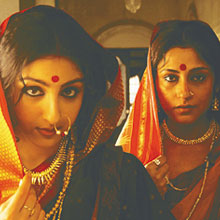
Of the limited number of flicks that I see, there are some that catches my imagination by the vivid portrayal of the social milieu, mostly as a period story with deep connections to today's contemporary Indian society. A film can either be viewed as a simple story well narrated or as a larger message hidden within the story. Two flicks that I recently saw had, surprisingly, juxtapositioned how Indian society viewed its women. ‘Antarmahal’ – a view of the Inner Chamber or, to me, an intimate view of the sanctum sanatorium of marriage. This period portrays the twin lives of the wives of a zamindar’s harem. Directed by Rituporno Ghosh, this perhaps is among the best Bengali movies that he has directed. The second film – ‘Water’ – directed by Deepa Mehta is also a period film depicting the life of widows in India.

Both the directors wouldn’t have met over a cup of coffee and discussed their films but it is pure serendipity that I watched these 2 films back to back. Antarmahal shows how a Zamindar remarried again since he failed to beget a child with his first wife and the intertwined lives of his wives. The zamindar, as a typical all powerful male, refuses to believe that he is impotent and not his wives. The belief, that a male can’t be impotent, peaks to such levels of absurdity that he gets a Brahmin to chant Vedic verses while he makes love to his wife, not once or twice but everyday. It is so easy, in today’s context, to replace the zamindar with a typical Indian male. You would see the same thought process and the same haughtiness. The zamindar also had a concubine, needless to say childless again. When the zamindar’s second wife quizzes him on why does he have a different eau-de-cologne on then what he had in the morning, pat comes the reply “A man from a rich family is expected to have a different eau-de-cologne on when he returns home in the evening!”

‘Water’ exposes the soft underbelly of Indian society exposing its sycophancy in dealing with widows. Indian widows, as a tradition, are supposed to shave their heads, don a plain cotton white saree, sustain on a strictly vegetarian diet and keep off fried food! Child marriages was rampant (in fact the norm!) right upto the early 19th century and you had child widows who had never met their husbands except the day that they got married. So what does the child bride remember about the marriage? The feast, the guests crowding in, the bright and colorful dress, and all the pampering! One stoke of fate turns a bright, bubbly child into a widow, plucked from her home, her parents and siblings and literally dumped in one of the teeming ‘Ashrams’ meant for widows either in Benaras (Varanasi) or Vrindavan! So what happened in the ashram? The less told the better. The widows were peddled to satisfy the whims and fancies of the landed gentry and high profile Brahmins. And what does one of the Brahmins have to say on this, “A widow is blessed when she makes love to a Brahmin!”

So does contemporary India continue to have these practices? Yes and No. India lives in multiple worlds and periods. The rural areas still practice child marriages. City dwellers are more enlightened though the strictures for a widow is still followed, excepting the shaving of the head. Do the men follow the same rules when they are bereaved from their wives? NO.

That also brings us to the title of this post. Manu, a revered sage of ancient India, was and is regarded as a lawgiver par excellence of both ancient and modern India. While he would have framed his laws in keeping with the times and social environment when he was alive, his laws were twisted and interpreted to suit males, Brahmins, the Kashtriyas…. in that order. Some gems from Manu to illustrate what I mean.

By a girl, by a young woman, or even by an aged one, nothing must be done independently, even in her own house. [v.5.147.]

In childhood a female must be subject to her father, in youth to her husband, when her lord is dead to her sons; a woman must never be independent. [v.5.148.]

Though destitute of virtue, or seeking pleasure (elsewhere), or devoid of good qualities, (yet) a husband must be constantly worshipped as a god by a faithful wife. [v.5.154.]

A man who is not a Brahmana ought to suffer death for adultery (samgrahana); for the wives of all the four castes even must always be carefully guarded. [v.8.359.]

Let him never slay a Brahmana, though he have committed all (possible) crimes; let him banish such an (offender), leaving all his property (to him) and (his body) unhurt. [v.8.380.]

Though I am also guilty of picking selective verses that illustrate my views and not some of the really good laws my contention is on how ancient laws, or for that matter any law, is twisted to serve individual or group interests.

Thursday, March 02, 2006

A Hindi Flick after a long time....

I went to a Hindi flick after a long time and that too after a great deal of selling of 'Rang De Basanti' - RDB for short - by my bro. I don't watch Hindi flicks and have to really jog my memory to recall the last Hindi flim that I viewed. RDB was refreshingly different though. Every thing, starting from the story line to Amir's acting, to the choice of his co-stars, shooting et all was great and so different from the run of the mill Hindi flicks. One point though; the ending could have been less gory to fully complete the cycle of happiness. Here's a couple of shots from the flick!